
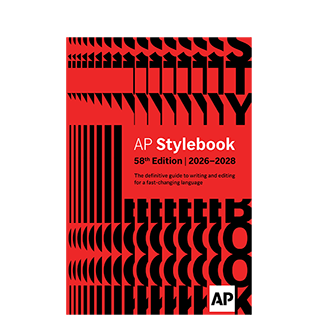
The classic, practical spiral-bound edition now is published every other year.
AP Stylebook, 58th Edition (spiral-bound print)
The spiral-bound Associated Press Stylebook, 58th Edition, includes chapters on artificial intelligence and criminal justice, plus a detailed checklist for self-editing. Specialized chapters cover sports, business, punctuation, religion, data journalism, inclusive storytelling, health and science, news values, and polls and surveys. ISBN: 978-0-917360-73-2.
Learn more
STYLE GUIDANCE ON YOUR COMPUTER, TABLET AND PHONE
AP Stylebook Online
This searchable, customizable, regularly updated version of AP Stylebook offers bonus features including Ask the Editor and Topical Guides. Add Merriam-Webster for a more comprehensive resource.
Learn more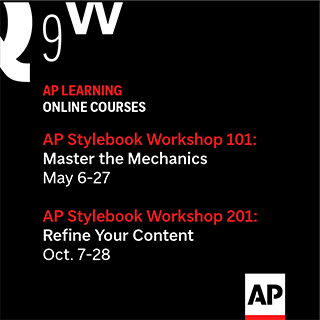
LEARN AP STYLE FROM THE PROFESSIONALS
AP Stylebook Workshop
Join the Stylebook's editors for one or both of our Stylebook courses in 2026. Participate in live virtual sessions with the editors who make AP style, get your questions answered and immerse yourself in lessons, tutorials and knowledge checks.
Learn more
STYLE-CHECKING TOOLS FOR MICROSOFT OFFICE AND WEB BROWSERS
AP StyleGuard Pro style-checking tools
Whether you are new to AP style or you want help keeping up with changing guidance, let our style-checking tools help you write and edit. Get style-checking help for Microsoft Word, Outlook and PowerPoint, or today’s most popular web browsers, including in Google Docs.
Learn more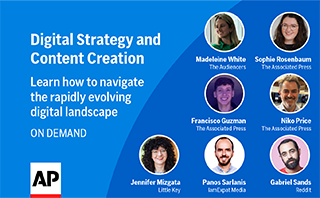
Navigating Change: How to Lead through the rapidly evolving digital landscape
Digital Strategy and Content Creation
In this course, we'll cover the current state of the digital landscape, including the impact of AI, the importance of investing in loyal audiences and how to nurture the communities you create. Join us for this educational series of discussions and strategic planning sessions.
Learn more
What Journalism can teach you about effective communication
Write Your Way to Success Workshop On Demand
In this four-part course, top writers and editors from The Associated Press show you how effective writing – and the elements that go into it – can point the way toward better outcomes in your own writing.
Learn more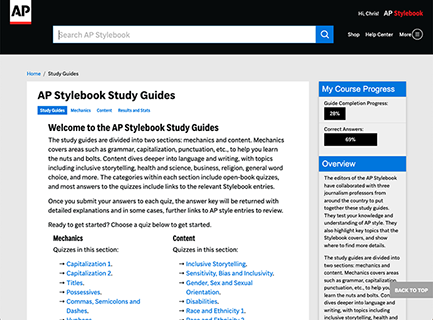
TEST YOUR KNOWLEDGE WITH OUR STUDY GUIDES
AP Stylebook Study Guides
Build your knowledge and understanding of AP style guidance, whether you're a new communicator or a seasoned professional. Created in partnership with three experienced AP style instructors, these study guides will step you through quizzes covering key Stylebook topics in both the mechanics of writing and the more complex issues of quality storytelling.
Learn more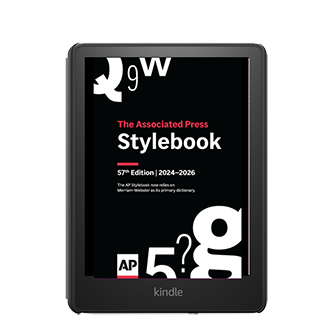
E-book edition of the AP Stylebook
AP Stylebook (e-book edition)
The e-book edition of AP Stylebook, 57th Edition, provides portable guidance that’s accessible without the need for connectivity. It features searchable AP style on the go with a comprehensive, dynamic index to help quickly find the words, definitions and rules you need.
Learn more
By journalists, for journalists, created in AP’s Mexico City newsroom
Manual de Estilo de la AP
El Manual de Estilo en Español de The Associate Press es una guía para periodistas y editores que incluye más de 4.000 entracías sobre el uso de algunas palabras y conceptos, además de sugerencias sobre cómo traducir algunas expresiones del inglés al español.
Learn more
Online Discussion Series for PR, Business and Local Communities
The World Cup Effect
Join Associated Press journalists and special guests for an in-depth exploration of the opportunities, challenges and logistics surrounding the global phenomenon of World Cup 2026 — returning to North America for the first time since 1994.
Learn more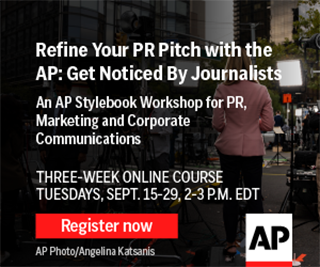
Get Noticed by Journalists
Refine Your PR Pitch with the AP
Brush up on your AP style skills as you refine how to pitch to journalists in this new course from AP Learning. Join live sessions to learn the essentials of AP style that matter most for press releases and corporate communications.
Learn moreLooking for more? See all the AP Stylebook products and choose the right one for you
Log in to your Stylebook account
Don't Have an Account Yet?
Register to view your products, order status, shipment trackings and manage your account settings.
Sign Up for our Newsletter
Keep up to date on style news. Sign up for our stylish monthly e-newsletter by submitting your email address below.
Sign UpMore Resources
Add the publications cited in the AP Stylebook bibliography to your library.